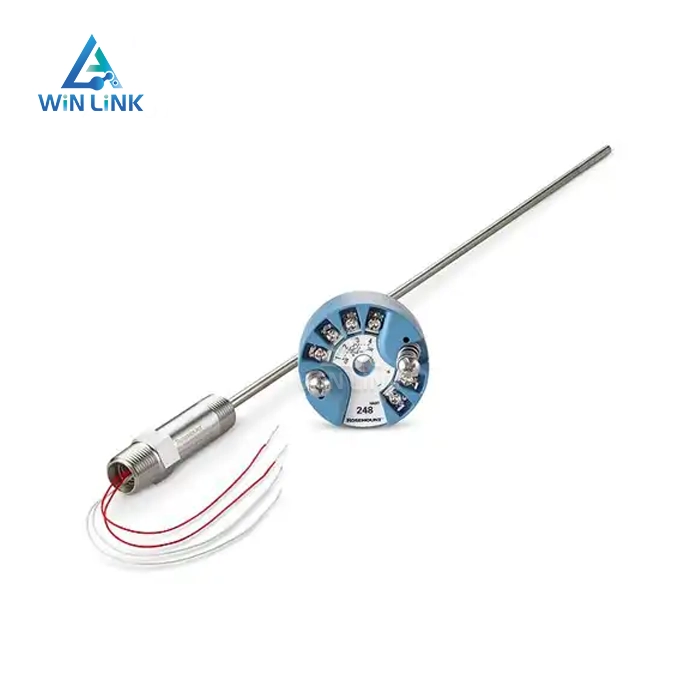
Rosemount 214C Temperature Sensor


2. Lead: 24 AWG lead; FEP insulation Color coding is carried out in accordance with IEC 60751.
3. Time constant/Response: When tested in flowing water in accordance with the provisions of IEC 60751:2008, it takes up to 10.8 seconds to reach 50% of the sensor response.
3. Stability: According to the method specified in IEC 60751:2008, the maximum freezing point resistance drift measured after 1,000 hours at the maximum specified temperature is ±0.15 °C (0.059).
4. Insulation resistance: At room temperature and measured at 500 VDC, the minimum insulation resistance is 1000 MΩ.
Rosemount 214C Temperature Sensor - Professional Industrial Temperature Measurement Solution
The Rosemount 214C Temperature Sensor delivers unmatched precision and durability for your most demanding process control environments. This industrial-grade sensing element, designed by Emerson, provides high-accuracy temperature measurements across a wide range of applications. With its advanced engineering and robust construction, the product addresses common industry challenges like measurement drift, vibration-induced failure, and signal instability that can cost you time and money.
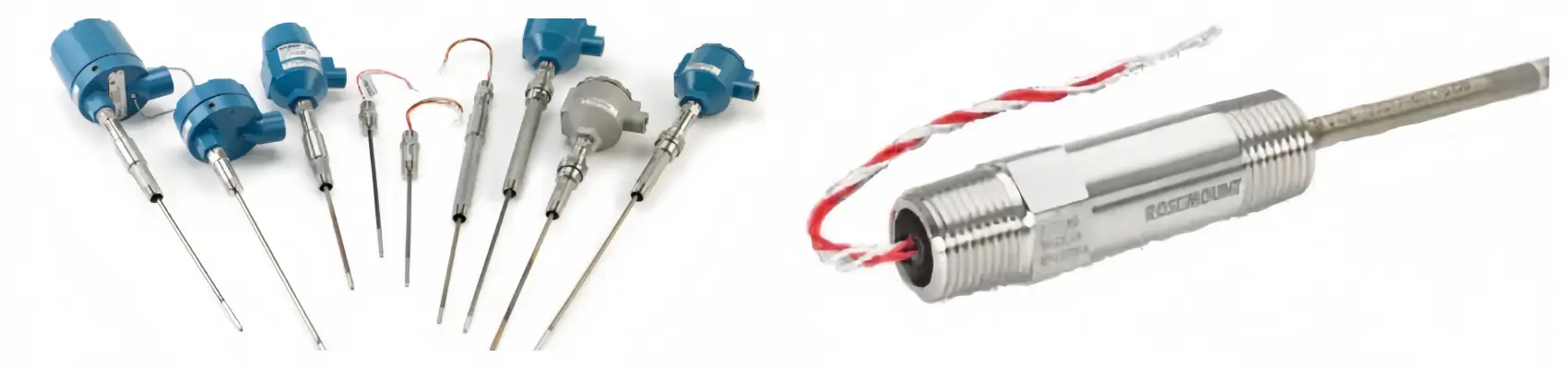
Superior Sensing Technology for Industrial Excellence
You need accuracy for your work, and this high-quality temperature sensor gives you just that. The device comes with both Resistance Temperature Detectors (RTDs) and Thermocouples, so you can choose the one that works best for your needs.
The RTD types use thin-film or wire-wound Pt100 parts that follow IEC 60751 rules to the letter. Based on how precise you need it to be, you can pick from Class B, Class A, or Class AA. Different types of thermocouples meet ASTM E230 standards for use in higher temperature situations.
This sensor is unique because it has Sensor-Transmitter Matching technology built into it. Callendar-Van Dusen (CVD) constants are used to cut down on total system error by up to 75% when paired with suitable Rosemount transmitters. For your important processes, this means fewer calibrations and more accurate results.
Technical Specifications
| Specification | Details |
|---|---|
| Temperature Range (RTD) | -196°C to 600°C (-321°F to 1112°F) |
| Sensing Elements | Single or dual element configurations |
| RTD Standards | IEC 60751 (Class B, A, AA accuracy) |
| Thermocouple Standards | ASTM E230 compliance |
| Sheath Material | 316L Stainless Steel |
| Sheath Diameter Options | 1/4 inch, 6mm, various sizes available |
| Lead Wire Insulation | PTFE or mineral oxide (MgO) |
| Vibration Resistance | High-g environment tested |
| Response Time | Up to 10.8 seconds (50% response in flowing water) |
| Insulation Resistance | Minimum 1000 MΩ at 500 VDC |
| Stability | ±0.15°C drift after 1,000 hours |
| Certifications | ATEX, CSA, FM, IECEx approved |
Key Advantages That Drive Results
Exceptional Vibration Resistance: Your Rosemount 214C Temperature Sensor equipment faces harsh conditions daily. The compacted mineral insulation (MgO) secures internal components, protecting them from mechanical damage common in high-vibration environments like pump and compressor discharge lines.
Quick Reaction Times: Time is cash in prepare control. The optimized tip development guarantees quick warm reaction, giving you the fast response times required for viable handle control and security systems.
Corrosion Resistance: The 316L stainless steel sheath gives great assurance against destructive handle media, amplifying sensor life and decreasing support costs.
Global Security Endorsements: With unsafe area certifications counting ATEX, CSA, FM, and IECEx, you can send this sensor unquestionably in dangerous climates worldwide.
Spring-Loaded Connectors: These guarantee positive contact with thermowells, minimizing warm slack and keeping up estimation exactness indeed in energetic prepare conditions.
Superior Soundness: After thorough testing per IEC 60751:2008 guidelines, the greatest float measured is fair ±0.15°C after 1,000 hours at most extreme temperature, guaranteeing long-term reliability.
Product Features
The unit components or dual-element Pt-100 RTD with film or winding design can meet various application requirements.
2. Thin-film sensors can withstand industry applications with high vibration.
3. The winding design is suitable for applications that require high precision and dual components as well as/or high-temperature applications.
4. It covers a temperature range of -196 to 600°C (-321 to 1112°F), enhancing the flexibility of application.
5. The Callendar-Van Dusen constant is beneficial for the transmitter - sensor matching and improves the accuracy.
6. Class A accuracy (optional) ensures that key temperature measurement points meet tolerance and accuracy standards.
7. Multiple housing and connector options help optimize applicability and meet various application requirements.
8. It includes spring compression or compact spring compression installation types, which have better applicability.
9. North American certification meets the requirements of hazardous locations.
Why Choose WIN Link STAR TECHNOLOGY?
With 20 a long time of fabricating encounter, we get it your research facility and mechanical gear needs. Our item meets CE, ISO, UL, and ETL universal standards.
We offer prompt conveyance from stock with coordinates shipping alternatives counting ocean, arrive, discuss, and express conveyance. Our ODM/OEM capabilities guarantee customized arrangements for diverse nations and client requirements.
Our benefit commitment incorporates 24-hour reaction times, 12-month guarantee scope, total establishment documentation, and 12-hour video establishment direction back.

Contact Us
Ready to upgrade your temperature measurement capabilities? Contact our technical team at info@winlinklab.com to discuss your specific application requirements and receive expert guidance on implementing the Rosemount 214C Temperature Sensor in your operations.
YOU MAY LIKE
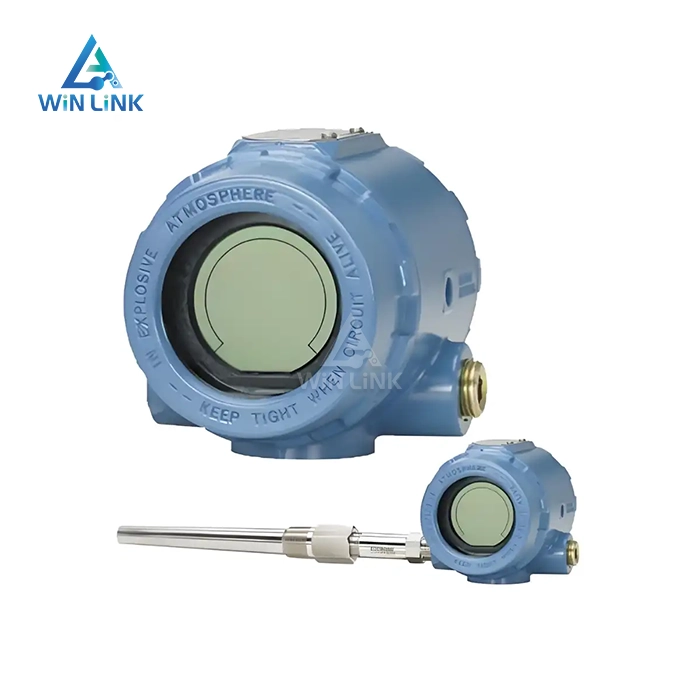
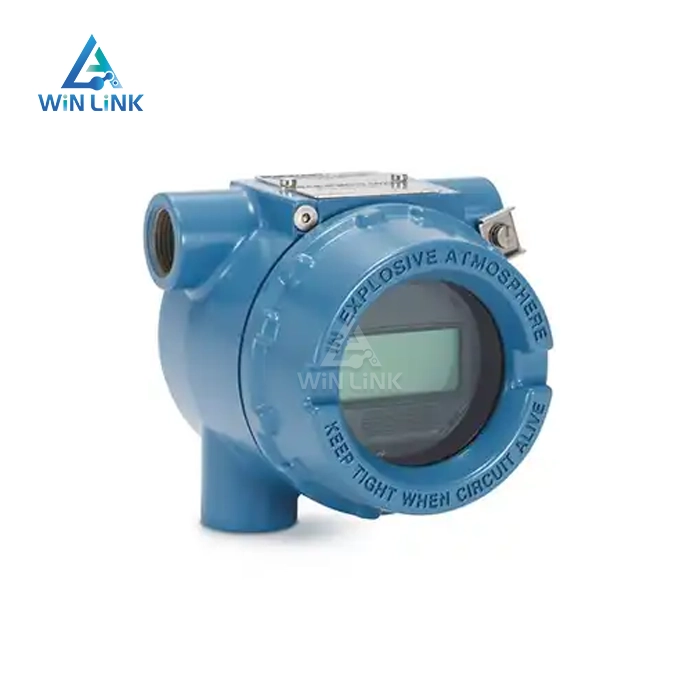
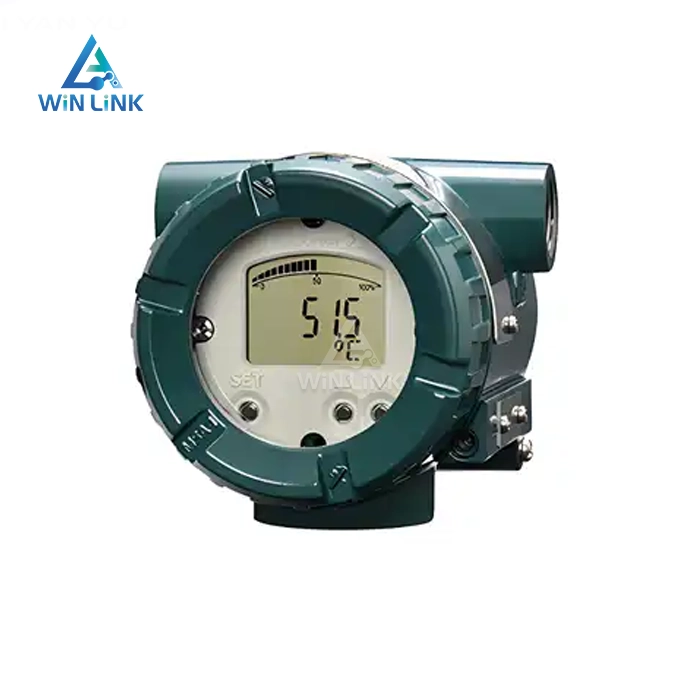
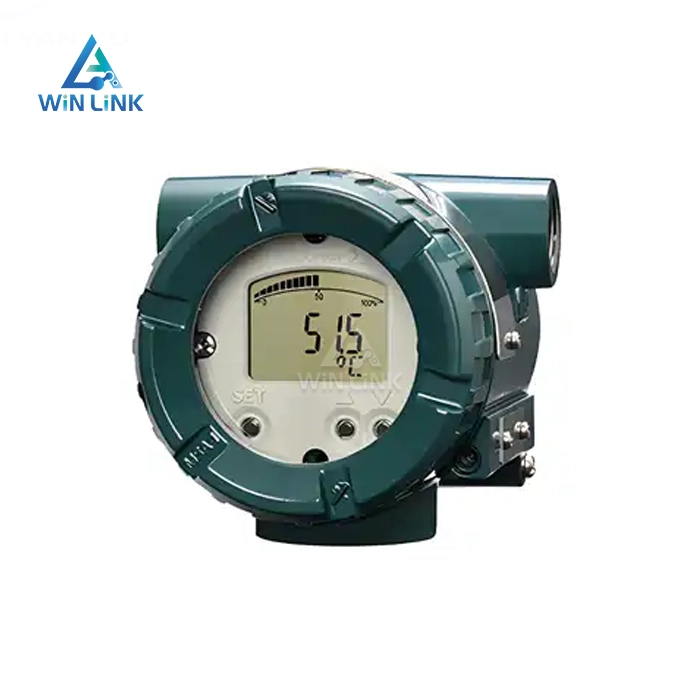
_1769649684517.webp "Yokogawa YTA110 Temperature Transmitter")